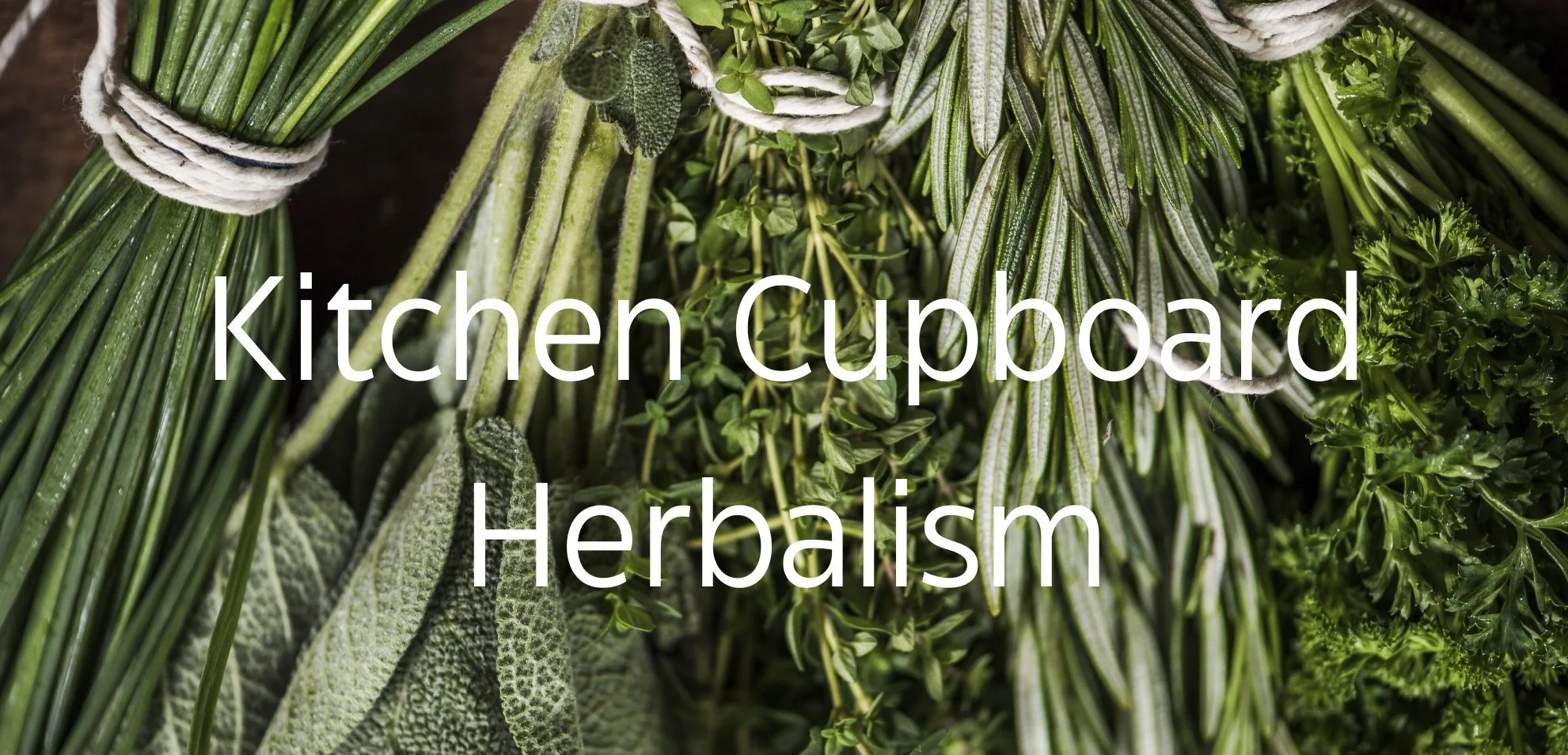
Exploring culinary herbs as herbal medicine to help your health and well-being.
Kitchen Cupboard herbalism has been a passion of mine for quite some time. Culinary herbs are not only good for you as food but also powerful medicine. I love the idea of people understanding and using the herbs they have access to and know to support their health and well-being.
In the coming months, I invite you to join me as we delve into the world of everyday culinary herbs and uncover their hidden medicinal gifts.
Using these culinary herbs in your food can be beneficial to your health; the exploration will focus more on therapeutic doses of these herbs and the benefits of using them.
So, why herbal medicine? Herbal medicine has been around for thousands of years; in some places it was and still is the primary source of health and healing. It has been called by many the People’s Medicine. In many ways, herbal medicine can be quite tasty and fun. Using tea blends, honey, syrups, and such. They are wonderful and delightful. However, truth be told, there are other times they are downright terrible. I think I need to be honest about this. I try very hard in my practice to make things tasty or at least palatable, but sometimes, you just can’t. Tinctures are particularly difficult to make taste good. It is an unfortunate truth, like Buckley’s cough syrup slogan, “it tastes terrible, but it works” can sometimes describe some herbal medicines. Though I keep trying nonetheless.
Here are a few tidbits as we move forward in our exploration of this topic.
Herb Quality: Let's talk quality! Of course, it would be great to get your hands on organic, ethically sourced, ethically harvested herbs, or ones you grew yourself, but let's face it. They aren't in everyone's price range, and not everyone has the space. Use what you can get at the start. When you can, grow, buy or barter for better quality as you go. Don’t get me wrong, quality and sustainability are important and worth working toward, but when you're starting out, use what you have.
Drying and Storage: Store the dried herbs, infused oils, salve, tinctures, and other wondrous concoctions you come up with in glass containers, away from heat sources and direct sunlight. Storing them this way helps them last longer and prevents mould and spoilage. Typically, it is said that dried leafy parts of the plants will stay fresh for about a year. Roots, berries and seeds last about 2-3 years. Really, colour and smell will tell the tale; if the herbs still have their colour and smell, they will still be good medicine.
Labelling Jars! Label, label, label. I cannot stress this enough. You will not remember what you put in that jar that is in the cabinet after a while. Trust me on this; I know this by experience. The best things to put on a label are what it is, what ingredients were used and what date it was made.
Looking forward to sharing my exploration of this topic with you. Diving into individual culinary herbs in the coming months.